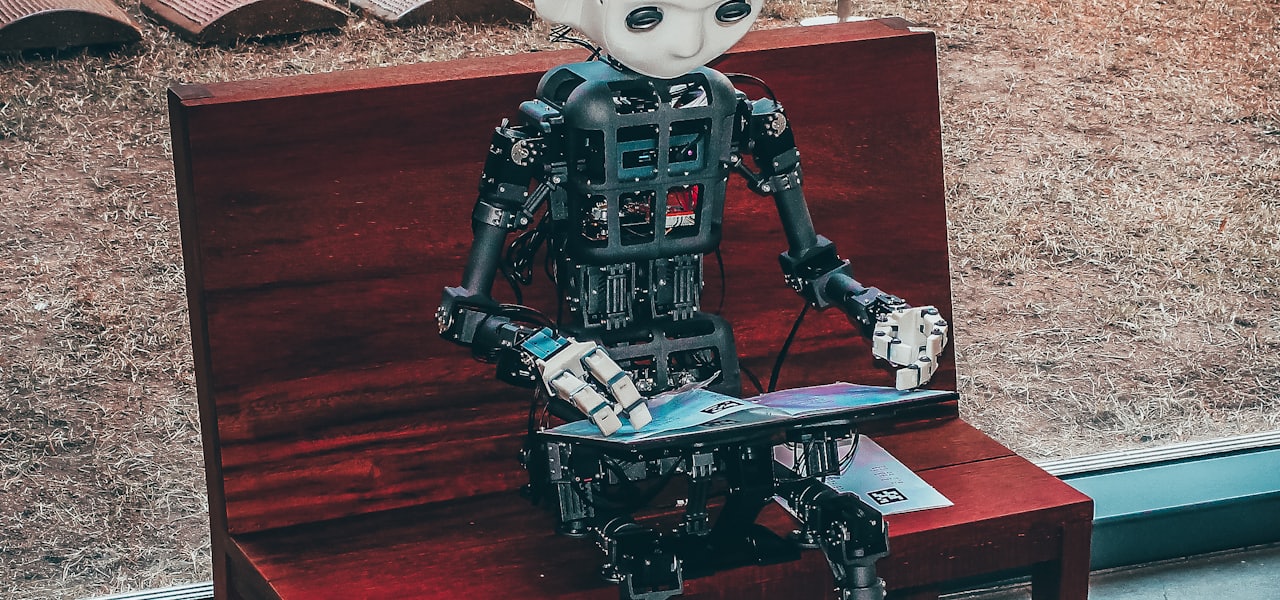
Legal information retrieval is the science of information retrieval applied to legal text, including legislation, case law, and scholarly works. Accurate legal information retrieval is important to provide access to the law to laymen and legal professionals. Its importance has increased because of the vast and quickly increasing amount of legal documents available through electronic means. Legal information retrieval is a part of the growing field of legal informatics. In a legal setting, it is frequently important to retrieve all information related to a specific query. However, commonly used boolean search methods (exact matches of specified terms) on full text legal documents have been shown to have an average recall rate as low as 20 percent, meaning that only 1 in 5 relevant documents are actually retrieved. In that case, researchers believed that they had retrieved over 75% of relevant documents. This may result in failing to retrieve important or precedential cases. In some jurisdictions this may be especially problematic, as legal professionals are ethically obligated to be reasonably informed as to relevant legal documents. Legal Information Retrieval attempts to increase the effectiveness of legal searches by increasing the number of relevant documents (providing a high recall rate) and reducing the number of irrelevant documents (a high precision rate). This is a difficult task, as the legal field is prone to jargon, polysemes (words that have different meanings when used in a legal context), and constant change. Techniques used to achieve these goals generally fall into three categories: boolean retrieval, manual classification of legal text, and natural language processing of legal text. == Problems == Application of standard information retrieval techniques to legal text can be more difficult than application in other subjects. One key problem is that the law rarely has an inherent taxonomy. Instead, the law is generally filled with open-ended terms, which may change over time. This can be especially true in common law countries, where each decided case can subtly change the meaning of a certain word or phrase. Legal information systems must also be programmed to deal with law-specific words and phrases. Though this is less problematic in the context of words which exist solely in law, legal texts also frequently use polysemes, words may have different meanings when used in a legal or common-speech manner, potentially both within the same document. The legal meanings may be dependent on the area of law in which it is applied. For example, in the context of European Union legislation, the term "worker" has four different meanings: Any worker as defined in Article 3(a) of Directive 89/391/EEC who habitually uses display screen equipment as a significant part of his normal work. Any person employed by an employer, including trainees and apprentices but excluding domestic servants; Any person carrying out an occupation on board a vessel, including trainees and apprentices, but excluding port pilots and shore personnel carrying out work on board a vessel at the quayside; Any person who, in the Member State concerned, is protected as an employee under national employment law and in accordance with national practice; It also has the common meaning: A person who works at a specific occupation. Though the terms may be similar, correct information retrieval must differentiate between the intended use and irrelevant uses in order to return the correct results. Even if a system overcomes the language problems inherent in law, it must still determine the relevancy of each result. In the context of judicial decisions, this requires determining the precedential value of the case. Case decisions from senior or superior courts may be more relevant than those from lower courts, even where the lower court's decision contains more discussion of the relevant facts. The opposite may be true, however, if the senior court has only a minor discussion of the topic (for example, if it is a secondary consideration in the case). An information retrieval system must also be aware of the authority of the jurisdiction. A case from a binding authority is most likely of more value than one from a non-binding authority. Additionally, the intentions of the user may determine which cases they find valuable. For instance, where a legal professional is attempting to argue a specific interpretation of law, he might find a minor court's decision which supports his position more valuable than a senior courts position which does not. He may also value similar positions from different areas of law, different jurisdictions, or dissenting opinions. Overcoming these problems can be made more difficult because of the large number of cases available. The number of legal cases available via electronic means is constantly increasing (in 2003, US appellate courts handed down approximately 500 new cases per day), meaning that an accurate legal information retrieval system must incorporate methods of both sorting past data and managing new data. == Techniques == === Boolean searches === Boolean searches, where a user may specify terms such as use of specific words or judgments by a specific court, are the most common type of search available via legal information retrieval systems. They are widely implemented but overcome few of the problems discussed above. The recall and precision rates of these searches vary depending on the implementation and searches analyzed. One study found a basic boolean search's recall rate to be roughly 20%, and its precision rate to be roughly 79%. Another study implemented a generic search (that is, not designed for legal uses) and found a recall rate of 56% and a precision rate of 72% among legal professionals. Both numbers increased when searches were run by non-legal professionals, to a 68% recall rate and 77% precision rate. This is likely explained because of the use of complex legal terms by the legal professionals. === Manual classification === In order to overcome the limits of basic boolean searches, information systems have attempted to classify case laws and statutes into more computer friendly structures. Usually, this results in the creation of an ontology to classify the texts, based on the way a legal professional might think about them. These attempt to link texts on the basis of their type, their value, and/or their topic areas. Most major legal search providers now implement some sort of classification search, such as Westlaw's “Natural Language” or LexisNexis' Headnote searches. Additionally, both of these services allow browsing of their classifications, via Westlaw's West Key Numbers or Lexis' Headnotes. Though these two search algorithms are proprietary and secret, it is known that they employ manual classification of text (though this may be computer-assisted). These systems can help overcome the majority of problems inherent in legal information retrieval systems, in that manual classification has the greatest chances of identifying landmark cases and understanding the issues that arise in the text. In one study, ontological searching resulted in a precision rate of 82% and a recall rate of 97% among legal professionals. The legal texts included, however, were carefully controlled to just a few areas of law in a specific jurisdiction. The major drawback to this approach is the requirement of using highly skilled legal professionals and large amounts of time to classify texts. As the amount of text available continues to increase, some have stated their belief that manual classification is unsustainable. === Natural language processing === In order to reduce the reliance on legal professionals and the amount of time needed, efforts have been made to create a system to automatically classify legal text and queries. Adequate translation of both would allow accurate information retrieval without the high cost of human classification. These automatic systems generally employ Natural Language Processing (NLP) techniques that are adapted to the legal domain, and also require the creation of a legal ontology. Though multiple systems have been postulated, few have reported results. One system, “SMILE,” which attempted to automatically extract classifications from case texts, resulted in an f-measure (which is a calculation of both recall rate and precision) of under 0.3 (compared to perfect f-measure of 1.0). This is probably much lower than an acceptable rate for general usage. Despite the limited results, many theorists predict that the evolution of such systems will eventually replace manual classification systems. === Citation-Based ranking === In the mid-90s the Room 5 case law retrieval project used citation mining for summaries and ranked its search results based on citation type and count. This slightly pre-dated the PageRank algorithm at Stanford which was also a citation-based ranking. Ranking of results was based
Roadie (app)
Roadie Inc. is an American package delivery company for business and private same-day, urgent and scheduled delivery in the United States. The company was founded in 2014 and launched its web and mobile apps in January 2015. As of September 2021, it reported having over 200,000 drivers covering more than 20,000 zip codes. Roadie states it matches gig drivers with deliveries that are directed along the routes they plan to travel. Major customers include The Home Depot, Walmart, Tractor Supply Company, Best Buy and Delta Air Lines. In September 2021, UPS entered into an agreement to acquire Roadie for an undisclosed amount with the transaction expected to be closed in the fourth quarter. == History == Roadie was founded by Marc Gorlin, a co-founder of Kabbage and founder of VerticalOne and Pretty Good Privacy, as a same-day and urgent delivery company in 2014. In January 2015, Roadie launched the first consumer to consumer (C2C) version of its app with a Series A funding round of $10 million. In February, Roadie announced a partnership with Waffle House to designate its restaurants "Roadie Roadhouses", offering a neutral meeting place for drivers and senders. Drivers receive free food and drink through the partnership. In May, late-night host Jimmy Kimmel discussed the Roadie-Waffle House relationship in an opening monologue on Jimmy Kimmel Live!. Roadie's driver network expanded significantly as a result. Roadie closed a Series B round of funding in June, raising $15 million, and its first business to business (B2B) app version launched that November. In 2015, Delta Air Lines signed an agreement with Roadie to deliver mishandled luggage, becoming Roadie’s first enterprise customer. Roadie launched a pilot program with Delta at Daytona Beach International Airport. Since then, the relationship has expanded to include over 70 airports around the United States and a first mile/last mile line haul relationship with Delta Cargo. In 2017, the company signed a deal with The Home Depot, also based in Atlanta, and in February 2019, closed a Series C round of funding. In October 2019, Roadie and Delta Cargo announced a partnership to create a same-day cross-country delivery offering, DASH Door-to-Door, the first of its kind from a U.S. passenger airline. Tractor Supply Company became the first general merchandise retailer to offer same-day delivery from every store in April 2020 through Roadie. In September 2021, UPS entered an agreement to acquire Roadie for an undisclosed amount. The transaction was expected to close in the fourth quarter of 2021. Roadies, which at the time reported having 200,000 operators serving over 20,000 ZIP Codes, was expected to continue operations under its name as a separate company with no transfer of packages between the UPS and Roadies networks. The relationship between the companies goes back several years with UPS being an early investor. Earlier in 2021, UPS had begun a pilot program testing same-day deliveries via Roadies. == Operations == === On-the-way model === Roadie’s app works by connecting drivers with senders, businesses or consumers who have items that need to be delivered. Deliveries within the app are referred to as "Gigs", which Gorlin said was inspired by live music road crews, also known as roadies. A sender creates a Gig on Roadie's web app or via its API. Drivers then review deliveries in their area on their mobile app and may choose to offer to take on individual or groups of deliveries along the same route. Gigs are then assigned to drivers by Roadie's algorithm. According to the company, this model encourages drivers to choose Gigs that align with their planned schedules and routes. Roadie calls this its "on-the-way" delivery model. The go-to-market approach taken by Roadie also differs from its competitors. Rather than launching in major cities and sequentially adding new markets city-by-city, Roadie launched nationwide from its inception. The company relies on retail and airline partners to drive volume of deliveries in individual markets, which in turn builds up a network of drivers in those areas, making it easier for small businesses and consumers to send deliveries as well. This strategy allows Roadie to reach smaller cities and towns in rural or exurban communities, traditionally difficult markets for delivery providers to serve. === Service lines === Roadie’s platform is most popular for same-day, on-demand or scheduled first mile/last mile delivery, especially delivery from stores and warehouses. Some retailers also use it for returns and reverse logistics, moving inventory, and hot shot shipping. Roadie operates 1-hour grocery delivery for Walmart, and delivers perishable food items for others including small, independent retailers. The on-the-way model complements the grocery industry’s just in time model, making last-mile deliveries that do not break the cold chain. === Cross-country same-day delivery === In October 2019, Roadie and Delta Cargo launched DASH Door-to-Door, a 24/7 door-to-door pick-up and delivery service. Roadie handles the first and last mile and Delta manages the line haul via passenger flights. The service launched originally from Atlanta to 55 cities and is an industry-first for a US commercial airline. === Promotion, awards and corporate citizenship === In September 2015, Roadie announced a partnership with Atlanta-based musician Ludacris, to promote the app. Following the devastation caused by flooding in Baton Rouge in 2016, Roadie offered free pickup and delivery for all deliveries traveling to and from the Baton Rouge area. In December 2020, Walmart named Roadie its top delivery partner for "Highest Driver Customer Satisfaction" and "Highest Net Promoter Score", after expanding into general merchandise deliveries as well as grocery that same year.
Ontology-based data integration
Ontology-based data integration involves the use of one or more ontologies to effectively combine data or information from multiple heterogeneous sources. It is one of the multiple data integration approaches and may be classified as Global-As-View (GAV). The effectiveness of ontology‑based data integration is closely tied to the consistency and expressivity of the ontology used in the integration process. == Background == Data from multiple sources are characterized by multiple types of heterogeneity. The following hierarchy is often used: Syntactic heterogeneity: is a result of differences in representation format of data Schematic or structural heterogeneity: the native model or structure to store data differ in data sources leading to structural heterogeneity. Schematic heterogeneity that particularly appears in structured databases is also an aspect of structural heterogeneity. Semantic heterogeneity: differences in interpretation of the 'meaning' of data are source of semantic heterogeneity System heterogeneity: use of different operating system, hardware platforms lead to system heterogeneity Ontologies, as formal models of representation with explicitly defined concepts and named relationships linking them, are used to address the issue of semantic heterogeneity in data sources. In domains like bioinformatics and biomedicine, the rapid development, adoption and public availability of ontologies [1] Archived 2007-06-16 at the Wayback Machine has made it possible for the data integration community to leverage them for semantic integration of data and information. == The role of ontologies == Ontologies enable the unambiguous identification of entities in heterogeneous information systems and assertion of applicable named relationships that connect these entities together. Specifically, ontologies play the following roles: Content Explication The ontology enables accurate interpretation of data from multiple sources through the explicit definition of terms and relationships in the ontology. Query Model In some systems like SIMS, the query is formulated using the ontology as a global query schema. Verification The ontology verifies the mappings used to integrate data from multiple sources. These mappings may either be user specified or generated by a system. == Approaches using ontologies for data integration == There are three main architectures that are implemented in ontology‑based data integration applications, namely, Single ontology approach A single ontology is used as a global reference model in the system. This is the simplest approach as it can be simulated by other approaches. SIMS is a prominent example of this approach. The Structured Knowledge Source Integration component of Research Cyc is another prominent example of this approach. (Title = Harnessing Cyc to Answer Clinical Researchers' Ad Hoc Queries). The Gellish Taxonomic Dictionary-Ontology follows this approach as well. Multiple ontologies Multiple ontologies, each modeling an individual data source, are used in combination for integration. Though, this approach is more flexible than the single ontology approach, it requires creation of mappings between the multiple ontologies. Ontology mapping is a challenging issue and is focus of large number of research efforts in computer science [2]. The OBSERVER system is an example of this approach. Hybrid approaches The hybrid approach involves the use of multiple ontologies that subscribe to a common, top-level vocabulary. The top-level vocabulary defines the basic terms of the domain. Thus, the hybrid approach makes it easier to use multiple ontologies for integration in presence of the common vocabulary.
Learning augmented algorithm
A learning augmented algorithm (also called algorithm with predictions) is an algorithm that can make use of a prediction to improve its performance. Whereas in regular algorithms just the problem instance is inputted, learning augmented algorithms accept an extra parameter. This extra parameter often is a prediction of some property of the solution. This prediction is then used by the algorithm to improve its running time or the quality of its output. The most common application are online algorithms, where a prediction on the uncertain instance is provided. == Description == A learning augmented algorithm typically takes an input ( I , A ) {\displaystyle ({\mathcal {I}},{\mathcal {A}})} . Here I {\displaystyle {\mathcal {I}}} is a problem instance and A {\displaystyle {\mathcal {A}}} is the prediction. A prediction can be any object. Common are the following types: Prediction of an optimal solution. The prediction gives a solution to the problem or characterizes an optimal solution. Prediction of the input. This is mainly used for online problems. Prediction of algorithmic actions. A prediction tailored to a specific algorithm that suggests a specific algorithm execution. Learning augmented algorithms usually satisfy the following three properties: Consistency. A learning augmented algorithm is said to be consistent if the algorithm can be proven to have a good performance when it is provided with an accurate prediction. Smoothness. A learning augmented algorithm is called smooth if its performance can be bounded by a function of the quality of the prediction. Here, the quality can be measured in a problem specific way. This is also called the prediction error. Robustness. A learning augmented algorithm is called robust if its worst-case performance can be bounded even if the given prediction is inaccurate. Learning augmented algorithms generally do not prescribe how the prediction should be done. For this purpose machine learning can be used. == Applications == A few examples of problems where learning augmented algorithms have been applied are the following. === Online algorithms === The ski rental problem The weighted paging problem The set cover problem Nonclairvoyant scheduling The online bipartite matching problem === Warm starting === ==== Data structures ==== The binary search algorithm is an algorithm for finding elements of a sorted list x 1 , … , x n {\displaystyle x_{1},\ldots ,x_{n}} . It needs O ( log ( n ) ) {\displaystyle O(\log(n))} steps to find an element with some known value y {\displaystyle y} in a list of length n {\displaystyle n} . With a prediction i {\displaystyle i} for the position of y {\displaystyle y} , the following learning augmented algorithm can be used. First, look at position i {\displaystyle i} in the list. If x i = y {\displaystyle x_{i}=y} , the element has been found. If x i < y {\displaystyle x_{i}
Data janitor
A data janitor is a person who works to take big data and condense it into useful amounts of information. Also known as a "data wrangler", a data janitor sifts through data for companies in the information technology industry. A multitude of start-ups rely on large amounts of data, so a data janitor works to help these businesses with this basic, but difficult process of interpreting data. While it is a commonly held belief that data janitor work is fully automated, many data scientists are employed primarily as data janitors. The information technology industry has been increasingly turning towards new sources of data gathered on consumers, so data janitors have become more commonplace in recent years.
Charge-coupled device
A charge-coupled device (CCD) is an integrated circuit containing an array of linked, or coupled, capacitors. Under the control of an external circuit, each capacitor can transfer its electric charge to a neighboring capacitor. CCD sensors are a major technology used in digital imaging. In a CCD image sensor, pixels are represented by p-doped metal–oxide–semiconductor (MOS) capacitors. These MOS capacitors, the basic building blocks of a CCD, are biased above the threshold for inversion when image acquisition begins, allowing the conversion of incoming photons into electron charges at the semiconductor-oxide interface; the CCD is then used to read out these charges. Although CCDs are not the only technology to allow for light detection, CCD image sensors are widely used in professional, medical, and scientific applications where high-quality image data are required. In applications with less exacting quality demands, such as consumer and professional digital cameras, active pixel sensors, also known as CMOS sensors (complementary MOS sensors), are generally used. However, the large quality advantage CCDs enjoyed early on has narrowed over time and since the late 2010s CMOS sensors are the dominant technology, having largely if not completely replaced CCD image sensors. == History == The basis for the CCD is the metal–oxide–semiconductor (MOS) structure, with MOS capacitors being the basic building blocks of a CCD, and a depleted MOS structure used as the photodetector in early CCD devices. In the late 1960s, Willard Boyle and George E. Smith at Bell Labs were researching MOS technology while working on semiconductor bubble memory. They realized that an electric charge was the analog of the magnetic bubble and that it could be stored on a tiny MOS capacitor. As it was fairly straightforward to fabricate a series of MOS capacitors in a row, they connected a suitable voltage to them so that the charge could be stepped along from one to the next. This led to the invention of the charge-coupled device by Boyle and Smith in 1969. They conceived of the design of what they termed, in their notebook, "Charge 'Bubble' Devices". The initial paper describing the concept in April 1970 listed possible uses as memory, a delay line, and an imaging device. The device could also be used as a shift register. The essence of the design was the ability to transfer charge along the surface of a semiconductor from one storage capacitor to the next. The first experimental device demonstrating the principle was a row of closely spaced metal squares on an oxidized silicon surface electrically accessed by wire bonds. It was demonstrated by Gil Amelio, Michael Francis Tompsett and George Smith in April 1970. This was the first experimental application of the CCD in image sensor technology, and used a depleted MOS structure as the photodetector. The first patent (U.S. patent 4,085,456) on the application of CCDs to imaging was assigned to Tompsett, who filed the application in 1971. The first working CCD made with integrated circuit technology was a simple 8-bit shift register, reported by Tompsett, Amelio and Smith in August 1970. This device had input and output circuits and was used to demonstrate its use as a shift register and as a crude eight pixel linear imaging device. Development of the device progressed at a rapid rate. By 1971, Bell researchers led by Michael Tompsett were able to capture images with simple linear devices. Several companies, including Fairchild Semiconductor, RCA and Texas Instruments, picked up on the invention and began development programs. Fairchild's effort, led by ex-Bell researcher Gil Amelio, was the first with commercial devices, and by 1974 had a linear 500-element device and a 2D 100 × 100 pixel device. Peter L. P. Dillon, a scientist at Kodak Research Labs, invented the first color CCD image sensor by overlaying a color filter array on this Fairchild 100 x 100 pixel Interline CCD starting in 1974. Steven Sasson, an electrical engineer working for the Kodak Apparatus Division, invented a digital still camera using this same Fairchild 100 × 100 CCD in 1975. The interline transfer (ILT) CCD device was proposed by L. Walsh and R. Dyck at Fairchild in 1973 to reduce smear and eliminate a mechanical shutter. To further reduce smear from bright light sources, the frame-interline-transfer (FIT) CCD architecture was developed by K. Horii, T. Kuroda and T. Kunii at Matsushita (now Panasonic) in 1981. The first KH-11 KENNEN reconnaissance satellite equipped with charge-coupled device array (800 × 800 pixels) technology for imaging was launched in December 1976. Under the leadership of Kazuo Iwama, Sony started a large development effort on CCDs involving a significant investment. Eventually, Sony managed to mass-produce CCDs for their camcorders. Before this happened, Iwama died in August 1982. Subsequently, a CCD chip was placed on his tombstone to acknowledge his contribution. The first mass-produced consumer CCD video camera, the CCD-G5, was released by Sony in 1983, based on a prototype developed by Yoshiaki Hagiwara in 1981. Early CCD sensors suffered from shutter lag. This was largely resolved with the invention of the pinned photodiode (PPD). It was invented by Nobukazu Teranishi, Hiromitsu Shiraki and Yasuo Ishihara at NEC in 1980. They recognized that lag can be eliminated if the signal carriers could be transferred from the photodiode to the CCD. This led to their invention of the pinned photodiode, a photodetector structure with low lag, low noise, high quantum efficiency and low dark current. It was first publicly reported by Teranishi and Ishihara with A. Kohono, E. Oda and K. Arai in 1982, with the addition of an anti-blooming structure. The new photodetector structure invented at NEC was given the name "pinned photodiode" (PPD) by B.C. Burkey at Kodak in 1984. In 1987, the PPD began to be incorporated into most CCD devices, becoming a fixture in consumer electronic video cameras and then digital still cameras. Since then, the PPD has been used in nearly all CCD sensors and then CMOS sensors. In January 2006, Boyle and Smith were awarded the National Academy of Engineering Charles Stark Draper Prize, and in 2009 they were awarded the Nobel Prize for Physics for their invention of the CCD concept. Michael Tompsett was awarded the 2010 National Medal of Technology and Innovation, for pioneering work and electronic technologies including the design and development of the first CCD imagers. He was also awarded the 2012 IEEE Edison Medal for "pioneering contributions to imaging devices including CCD Imagers, cameras and thermal imagers". == Basics of operation == In a CCD for capturing images, there is a photoactive region (an epitaxial layer of silicon), and a transmission region made out of a shift register (the CCD, properly speaking). An image is projected through a lens onto the capacitor array (the photoactive region), causing each capacitor to accumulate an electric charge proportional to the light intensity at that location. A one-dimensional array, used in line-scan cameras, captures a single slice of the image, whereas a two-dimensional array, used in video and still cameras, captures a two-dimensional picture corresponding to the scene projected onto the focal plane of the sensor. Once the array has been exposed to the image, a control circuit causes each capacitor to transfer its contents to its neighbor (operating as a shift register). The last capacitor in the array dumps its charge into a charge amplifier, which converts the charge into a voltage. By repeating this process, the controlling circuit converts the entire contents of the array in the semiconductor to a sequence of voltages. In a digital device, these voltages are then sampled, digitized, and usually stored in memory; in an analog device (such as an analog video camera), they are processed into a continuous analog signal (e.g. by feeding the output of the charge amplifier into a low-pass filter), which is then processed and fed out to other circuits for transmission, recording, or other processing. == Detailed physics of operation == === Charge generation === Before the MOS capacitors are exposed to light, they are biased into the depletion region; in n-channel CCDs, the silicon under the bias gate is slightly p-doped or intrinsic. The gate is then biased at a positive potential, above the threshold for strong inversion, which will eventually result in the creation of an n channel below the gate as in a MOSFET. However, it takes time to reach this thermal equilibrium: up to hours in high-end scientific cameras cooled at low temperature. Initially after biasing, the holes are pushed far into the substrate, and no mobile electrons are at or near the surface; the CCD thus operates in a non-equilibrium state called deep depletion. Then, when electron–hole pairs are generated in the depletion region, they are separated by the electric field, the elec
Literature review
A literature review is an overview of previously published works on a particular topic. The term can refer to a full scholarly paper or a section of a scholarly work such as books or articles. Either way, a literature review provides the researcher/author and the audiences with general information of an existing knowledge of a particular topic. A good literature review has a proper research question, a proper theoretical framework, and/or a chosen research method. It serves to situate the current study within the body of the relevant literature and provides context for the reader. In such cases, the review usually precedes the methodology and results sections of the work. Producing a literature review is often part of a graduate and post-graduate requirement, included in the preparation of a thesis, dissertation, or a journal article. Literature reviews are also common in a research proposal or prospectus (the document approved before a student formally begins a dissertation or thesis). A literature review can be a type of a review article. In this sense, it is a scholarly paper that presents the current knowledge including substantive findings as well as theoretical and methodological contributions to a particular topic. Literature reviews are secondary sources and do not report new or original experimental work. Most often associated with academic-oriented literature, such reviews are found in academic journals and are not to be confused with book reviews, which may also appear in the same publication. Literature reviews are a basis for research in nearly every academic field. == Types == Since the concept of a systematic review was formalized in the 1970s, a basic division among types of reviews is the dichotomy of narrative reviews versus systematic reviews. The main types of narrative reviews are evaluative, exploratory, and instrumental. A fourth type of review of literature (the scientific literature) is the systematic review but it is not called a literature review, which absent further specification, conventionally refers to narrative reviews. A systematic review focuses on a specific research question to identify, appraise, select, and synthesize all high-quality research evidence and arguments relevant to that question. A meta-analysis is typically a systematic review using statistical methods to effectively combine the data used on all selected studies to produce a more reliable result. Torraco (2016) describes an integrative literature review. The purpose of an integrative literature review is to generate new knowledge on a topic through the process of review, critique, and synthesis of the literature under investigation. George et al (2023) offer an extensive overview of review approaches. They also propose a model for selecting an approach by looking at the purpose, object, subject, community, and practices of the review. They describe six different types of review, each with their own unique purposes: Exploratory or scoping reviews focus on breadth as opposed to depth Systematic or integrative reviews integrate empirical studies on a topic Meta-narrative reviews are qualitative and use literature to compare research or practice communities Problematizing or critical reviews propose new perspectives on a concept by association with other literature Meta-analyses and meta-regressions integrate quantitative studies and identify moderators Mixed research syntheses combine other review approaches in the same paper == Process and product == Shields and Rangarajan (2013) distinguish between the process of reviewing the literature and a finished work or product known as a literature review. The process of reviewing the literature is often ongoing and informs many aspects of the empirical research project. The process of reviewing the literature requires different kinds of activities and ways of thinking. Shields and Rangarajan (2013) and Granello (2001) link the activities of doing a literature review with Benjamin Bloom's revised taxonomy of the cognitive domain (ways of thinking: remembering, understanding, applying, analyzing, evaluating, and creating). === Use of artificial intelligence in a literature review === Artificial intelligence (AI) is reshaping traditional literature reviews across various disciplines. Generative pre-trained transformers, such as ChatGPT, are often used by students and academics for review purposes. Since 2023, an increasing number of tools powered by large language models and other artificial intelligence technologies have been developed to assist, automate, or generate literature reviews. Nevertheless, the employment of ChatGPT in academic reviews is problematic due to ChatGPT's propensity to "hallucinate". In response, efforts are being made to mitigate these hallucinations through the integration of plugins. For instance, Rad et al. (2023) used ScholarAI for review in cardiothoracic surgery.